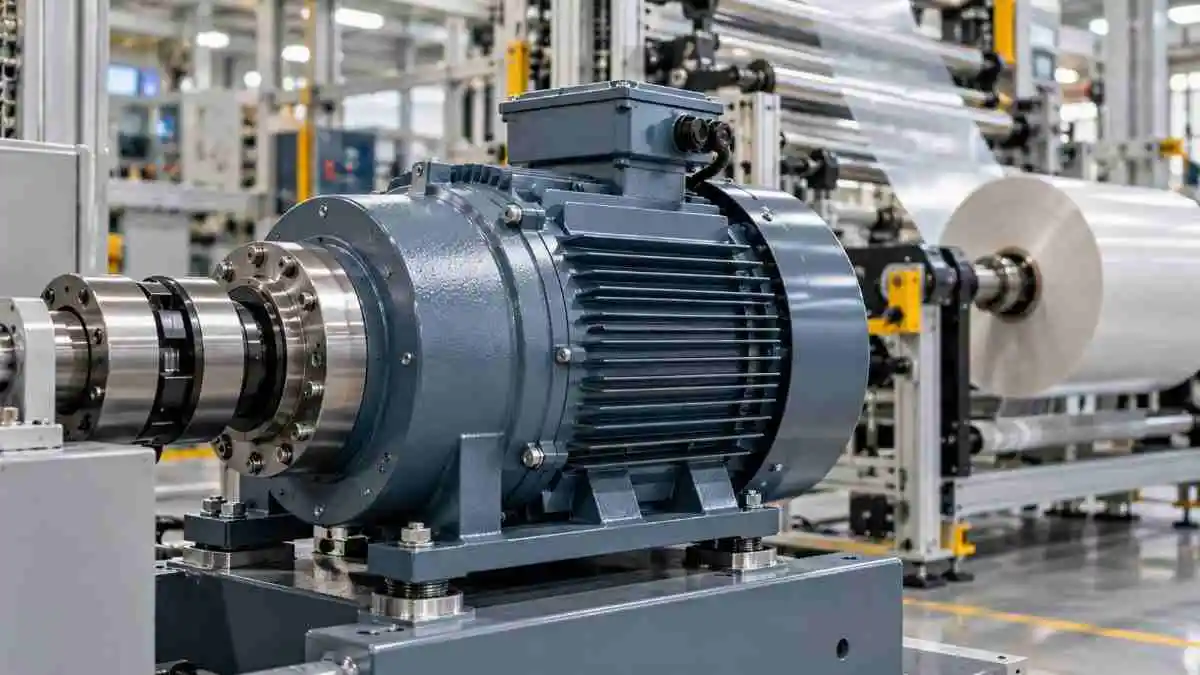
It is crucial to choose the right torque motor in order for the machinery to have a controlled rotation, constant tension or pulling force. Choosing a wrong motor will cause overheating, uneven winding, additional maintenance and disturbances in the process of manufacturing. This is why it is necessary for the buyers to take into consideration the real conditions of work and not only the price or power rating of the motor.
An appropriate Industrial Torque Motor will ensure smooth operation of equipment where the torque, speed, duty cycle, and electrical input are compatible. Such knowledge will make comparison of products easy.
What Is a Torque Motor and How Does It Work?
A torque motor keeps pulling at a steady force. Shaft crawling? Fine. Shaft sitting dead still? Also fine, and that's exactly where a regular motor starts to struggle. Here's how it plays out in a plant:
- It holds a steady force at low RPM, with no hunting around.
- Shaft stalled? It can sit there without cooking itself, provided you stay inside the rated duty.
- Torque drops as speed climbs, and that's the behaviour tension jobs actually want.
- Pull is adjusted through supply voltage or a controller. Simple.
- An electric torque motor holds tension even as the roll builds up. Thin film, fine wire, delicate yarn: they all need that.
|
Did You Know? “Tension is torque divided by roll radius. Roll gets fatter, same torque, less pull. So the torque has to be adjusted as the roll builds up.”
|
Different Types of Torque Motors Used in Industries
Two things separate most of them: the power they run on, and the phases. Your supply and control setup usually make the call.
AC Torque Motors
An AC Torque Motor runs on regular mains supply, which makes it a common pick for winding and tension jobs. Quick notes:
- Works on standard AC supply.
- Torque follows voltage, so a simple controller usually does the job.
- Duty cycle matters. Long stalled runs need the right rating.
DC Torque Motors
A DC torque motor gives finer control. Before choosing it, check:
- Drive or controller compatibility.
- Whether precise control is really your priority. If it is, DC makes sense.
- Maintenance needs, especially if brushes are fitted.
Single Phase and Three Phase Torque Motors
Your power supply decides this one:
- A Single Phase Torque Motor fits smaller machines, and workshops that only have single-phase power.
- Bigger plants with heavier loads usually go for a Three Phase Torque Motor.
- Simple choice, indeed. Look at what you have for supply and choose the engine accordingly.
Key Factors to Consider When Choosing a Torque Motor
On a datasheet, torque motor specifications all look similar. On the machine, they don't. Before ordering, go through these seven:
- Continuous torque and peak torque both matter. Steady load? Worst spike? Cover both.
- Operating RPM: Such motors perform best when operated at a low rate of speed, hence no fast spinner performance here.
- Duty Cycle: Running continuously, intermittently, or constantly stalling? The manufacturer must know this first.
- Power supply: Voltage, frequency, phase. Don't guess any of the three.
- Thermal limits: Heat is what kills motors, so check insulation class and airflow.
- Control system: Will you use a voltage controller or a drive?
- Mounting and shaft size: A wrong frame or shaft dimension means rework, so confirm both before ordering.
Handling heavy rolls and needing a high torque motor? Send the load details to the maker early. It's the quickest route to good torque motor selection.
Major Industrial Applications of Torque Motors
Speed isn't the point here. Steady pull is. You'll see these motors in:
- Winding and unwinding lines: A torque motor for winding machines stops wire, film or paper from sagging mid-run.
- Printing machines that need steady web tension.
- Packaging lines feeding film or foil.
- Textile machines that pull yarn or fabric through at a controlled tension.
- Automation setups that need steady holding force.
- Any system built around a tension control motor.
|
Trivia: “The word "torque" comes from the Latin torquere, to twist. Fitting, isn't it?”
|
Benefits of Choosing a High-Quality Torque Motor
A good motor pays you back quietly, shift after shift. The benefits of a quality industrial torque motor are practical:
- Smooth, controllable torque.
- Steady low-speed pull without constant fiddling.
- Reliable running within rated duty.
- Less mechanical complexity in some setups, so fewer parts to wear out.
- Better long-term value. A cheap motor that fails twice isn't cheap.
Torque Motor Buying Mistakes and Maintenance Tips
Most troubles with motors stem from several typical purchasing errors and carelessness. Both can be easily prevented.
Let’s begin with the most common errors people make while choosing a motor:
- Choosing the cheapest motor: Overheating of such a motor in three months will cost you more than the initial price.
- Neglecting the duty cycle: Short stalls motor won’t work properly during a whole shift on standstill.
- Estimating the voltage: It should match your plant.
- Ignoring the roll size: Tell the producer about the minimum and maximum sizes.
- Buying a motor without a datasheet: There is always a reason why a manufacturer doesn't have one.
After installing the motor, it takes just several minutes a week to control its condition. Check the following things:
- Clean your vents: Dust impedes flow, and heat is always the primary killer.
- Look for abnormal heat.
- Listen for abnormal sound: The bearings normally make themselves known first.
- Tighten any loose connections.
- Check your voltage since torque is dependent on voltage in many cases.
Five minutes spent now can save you days later.
How to Choose Reliable Torque Motor Manufacturers and Suppliers in India
Dependable Torque Motor Manufacturers In India will want to know your load before they quote anything. While comparing, go through this list:
- Specifications, line by line. Not just price.
- Customization: Shaft, voltage, mounting.
- Testing: Do they test before dispatch? Ask to see the results.
- Stock and lead time: Can they deliver while your line is waiting?
- Technical support: Someone who can answer a question about your machine without a long wait.
- After-sales service, covering spares, repairs and advice when something acts up.
If you're buying through Torque Motor Suppliers or torque motor dealers, get the specifications in writing before any payment goes out.
Why Choose Altra Power Electrical Industries for Torque Motors?
Altra Power manufactures single phase and three phase induction, geared, brake, vibratory and DC motors. Buyers comparing torque motor suppliers get technical guidance from the team. Browse the torque motor range or send over your load, RPM and supply details. On enquiry, you can expect:
- A clear conversation about your application.
- Help matching torque, speed and supply to your machine.
- A direct route to request a quotation.
Conclusion
|
Once torque, speed, duty, supply, heat and control are sorted, the machine tends to run far more smoothly. If you're searching for dependable torque motor suppliers in India, Talk to Altra Power with your specifications and ask for a quotation.
|