By Altra Power Electrical Industries Pvt. Ltd | Electric Motor Manufacturer Since 1993, Nashik, Maharashtra
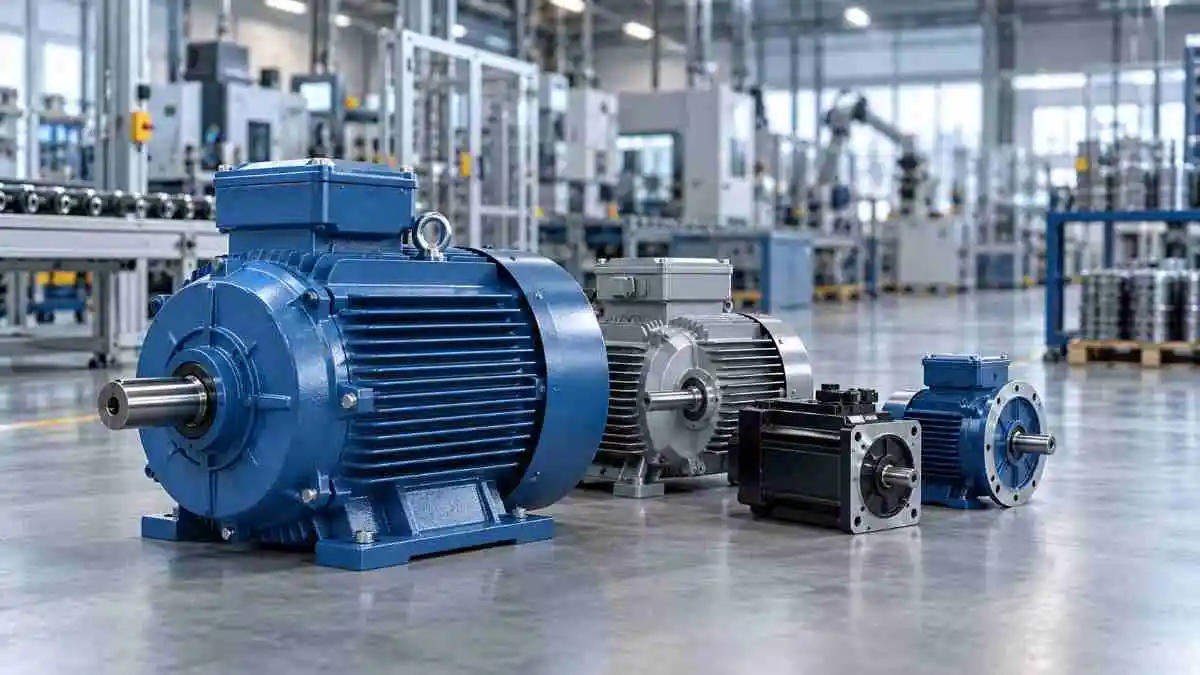
Most plants have at least one motor story. A unit that kept tripping every few weeks. One that never actually reached its rated speed. Or worse, one that ran fine for two months and then quietly burned out during a night shift. In almost every case, the problem traces back to selection, not the machine itself. Pick the right electric motor and honestly, it stops being something you think about. It just runs. This piece looks at what actually goes into picking an Industrial Electric Motor that suits your equipment, not just the price list.
|
Did You Know? “Motors are believed to use close to half the electricity consumed by factories globally. So a motor that's a poor fit for the job isn't just underperforming, it's adding to that bill every single day it runs.”
|
Why Choosing the Right Electric Motor Matters
A motor drives almost every piece of industrial equipment in some form, so getting it wrong doesn't stay contained to one machine. It shows up elsewhere too. Slightly higher heat. A bearing that wears faster than it should. Small things, until they aren't.
- Fewer surprises on the shop floor during a shift
- Lower electricity bills, month after month
- Less unplanned downtime
- Fewer repair calls and less spare-parts spending
- A motor that simply lasts longer
None of this happens by chance though. It starts with actually understanding what the machine needs.
Understand Your Industrial Application Requirements
Two machines can look nearly identical and still call for completely different motors. A conveyor starting under full load and a fan spinning up gradually are not the same job, even if both technically just "need a motor." So before comparing specs, it helps to sit with the equipment itself and work through a few basics.
- Constant load, variable load, or sudden shock loads?
- Daily run hours, and how often it stops and restarts
- Indoor and clean, or dusty and humid
- Required speed, torque, and how it needs to be mounted
- Any noise or vibration limits for that part of the plant
Key Factors to Consider When Choosing an Electric Motor
Once you know the application, most of what's left is technical. A few specifications end up deciding whether a motor genuinely fits the job or just gets by until it doesn't. Worth going through each one properly instead of defaulting to whatever's "standard."
Power Rating and Load Requirements
This is usually where things go wrong first. Undersize it and it'll overheat, then fail early, sometimes within months. Oversize it and you've basically paid extra for horsepower that never gets used. The rated power should match the actual measured load. Real numbers from the machine, not a figure someone rounded up "to be safe."
Speed, RPM and Torque
Pumps generally want steady torque at a fairly consistent speed. Blowers are a different animal, usually needing higher RPM and less starting torque to get going. Call both "an electric motor" if you want, technically true. Just don't expect one to do the other's job well.
Duty Cycle and Operating Hours
There's also the question of how often the thing starts and stops, which honestly gets overlooked more than it should.
- Continuous duty (S1). Runs non-stop. Common in pumps and fans.
- Intermittent duty (S3). On-off cycles. Typical in hoists and lifts.
- Frequent start-stop. Needs a build that can take repeated inrush current without overheating.
Efficiency and Energy Consumption
An energy efficient electric motor usually costs a bit more on day one. Run it for a couple of years though, and that gap tends to close, sometimes several times over once you count the electricity saved. Buyers who look only at the sticker price often miss this completely.
|
Did You Know? “Run a motor ten hours a day for a year, and the power it uses can end up costing more than the motor itself. Efficiency isn't really a nice extra. It's often the bigger expense long term.”
|
Operating Environment and Protection
Where a motor sits changes what it needs to survive.
- Dusty workshops need a higher IP-rated enclosure
- Damp areas need sealed, moisture-resistant windings
- Hot zones near furnaces need better thermal tolerance
- Outdoor units need weatherproof, corrosion-resistant housings
Match the Electric Motor to Your Application
Rarely does one motor suit every machine on a floor equally well.
- Pumps need steady torque and consistent RPM
- Fans and blowers need higher speed and efficient cooling
- Conveyors need strong starting torque for a loaded belt
- Machine tools need precise speed control with low vibration
- Packaging lines do better with compact, quick-response motors
- HVAC systems need efficiency for long continuous runs
- Material handling needs motors rugged enough for heavy repeated loads
Even buyers who know this still slip up sometimes. A few mistakes come up again and again.
Common Electric Motor Selection Mistakes to Avoid
- Sizing by guesswork instead of actual load numbers
- Skipping starting torque checks on heavy or shock-loaded machinery
- Going with the cheapest option without checking running costs
- Ignoring dust, moisture, or heat at the site
- Leaving efficiency and future maintenance out of the decision
Most of this comes down to rushing. And it usually costs more later than it saved up front.
What to Look for in an Electric Motor Manufacturer
Specs matter, but who's building the motor matters too. A dependable Electric Motor Manufacturer should be able to show real proof, not just claims.
- An actual manufacturing track record
- A product range wide enough for different ratings and duties
- Willingness to customise for an unusual application
- Documented quality testing against real standards
- A team that still answers calls after the sale
Altra Power electrical Industries has been building motors since 1993. That kind of time on the floor tends to show in how products are tested and how support actually works once the invoice is closed. As one of the Electric Motor Manufacturers In India, the focus stays on motors built for real industrial conditions, not just for a spec sheet.
|
Did You Know? “The three-phase induction motor isn't new. It dates back to the late 1880s, and a few engineers arrived at it around the same time, working separately. Well over a century later, walk into most factories and there's a decent chance it's still the motor doing the work.”
|
Conclusion
In all honesty, nothing has to be more complicated than that. Determine the real requirements of the machine, make sure you have the correct power and torque ratings, consider the duty cycle and the environment, and don’t be ruled only by price. If you do this much, the rest will pretty much take care of itself for many years to come. To find out exactly what is available in terms of motors, Altra Power's Electric Motors are designed just like this.
|
Not sure which motor fits your machine? Talk to Altra Power's team and get advice based on your actual application, not a generic recommendation.
|