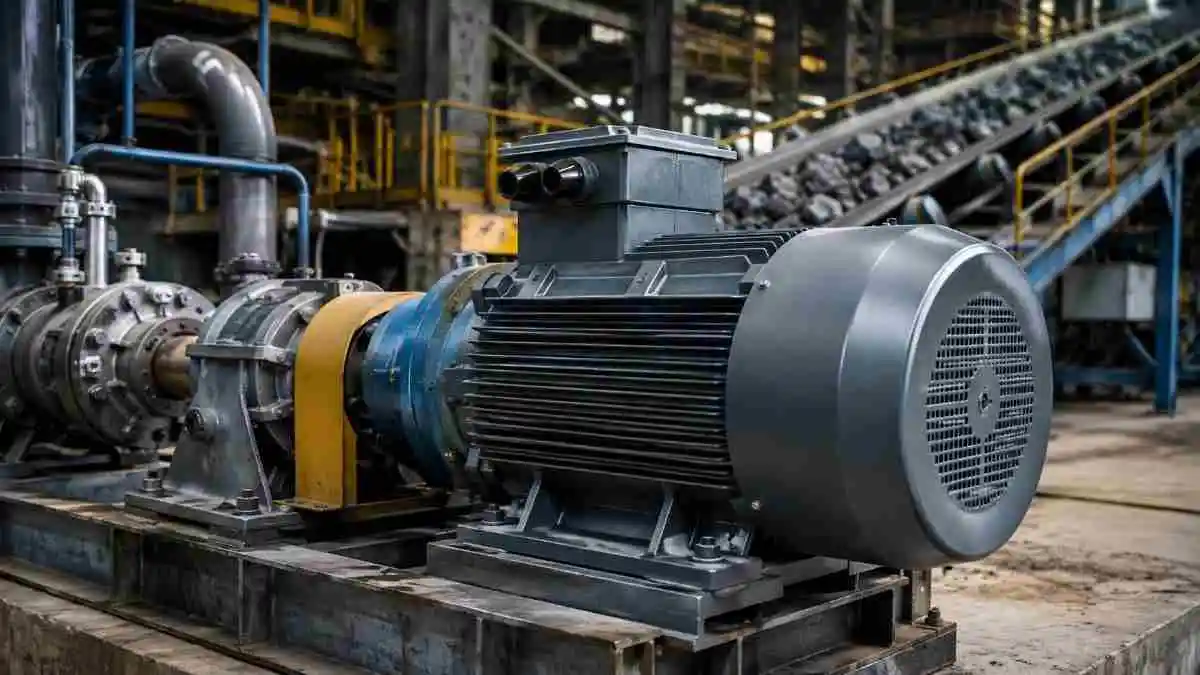
A practical, engineering-based guide to selecting the right motor for demanding industrial equipment.
A Heavy Duty Motor isn't just another line item on a purchase order — it's what keeps a machine running when the load gets serious. Get the selection wrong, and you're looking at overheating, early bearing wear, or a motor that simply can't handle the starting torque.
For Heavy Duty Applications like crushers, conveyors, and high-load pumps, the right choice depends on the actual equipment and how it runs — not a generic power rating pulled off a spec sheet. Match the motor to the machine, and service life, reliability, and uptime tend to fall into place on their own.
What Is a Heavy Duty Motor?
So what actually makes a motor “heavy duty”? A Heavy Duty Motor is built to take loads and operating conditions that would burn out a standard-duty unit in weeks. Extended run times, frequent starts and stops, high inertia loads, mechanical stress that never really lets up — that's the everyday reality. Sturdier windings, tougher bearings, frames that can actually shed heat under sustained load make the difference.
An Industrial Heavy Duty Motor is built for machinery that works hard, shift after shift. Not for a light, intermittent job like a desk fan or a kitchen appliance. A motor rated for occasional light-duty use just isn't engineered to survive what industrial equipment throws at it, day in and day out.
Why Choosing the Right Heavy Duty Motor Matters
Motor selection affects a lot more than whether a machine switches on. Get it right, and a Heavy Duty Motor holds up for years. Get it wrong, and here's roughly what happens:
- Equipment runs reliably even under sustained industrial load
- Starting and running load get handled without overheating
- Energy consumption stays predictable across long shifts
- Fewer maintenance calls, fewer surprise part replacements
- Downtime risk on the line drops noticeably
Get this right in heavy duty industrial applications, and both the industrial motor and the equipment it drives tend to last longer — with fewer headaches along the way.
FACT: A motor's nameplate rating reflects standard test conditions and should always be checked against real operating load, not assumed automatically.
Key Factors to Consider When Choosing a Heavy Duty Motor
Before signing off on a purchase, there's a handful of interconnected factors worth weighing. heavy duty motor selection means checking power, torque, speed, duty cycle, environment, and installation — not just picking a number off a catalog page for the right Heavy Duty Motor.
1. Power and Load Requirements
Power requirement should come from the actual load the equipment places on the motor — not a rough guess:
- Normal operating load under everyday running conditions
- Starting load, plus any peak load spikes
- Steering clear of both over-sizing and under-sizing
Go by heavy duty motor power figures alone, skip the real motor load requirements, and you'll likely end up with a poor match.
2. Speed and Torque Requirements
Speed and torque don't work in isolation. Together, they decide whether a machine starts smoothly or struggles right out of the gate:
- RPM the driven equipment actually needs.
- Starting torque to break initial resistance.
- Running torque to keep things moving.
At the end of the day, it's the driven machine that sets the real requirement for motor speed and heavy duty motor torque across Heavy Duty Applications — not the nameplate.
3. Duty Cycle and Operating Hours
How often — and how long — a Heavy Duty Motor runs each day sets its duty cycle. That, in turn, drives the thermal stress it takes on over a shift:
- Continuous operation, hour after hour
- Intermittent operation with breaks in between
- Frequent starting and stopping
Rated duty has to match the real operating pattern. Where running never really stops, a continuous duty motor is the fit.
4. Operating Environment and Protection
No two plant floors look the same, and that affects motor performance more than most people expect:
- Dust and airborne particulate buildup
- Moisture, wash-downs, humidity
- Temperature swings and heat buildup
- Tight, poorly ventilated spaces
An industrial heavy duty motor needs an enclosure matched to where it's actually installed — assume standard heavy duty applications conditions, and premature failure tends to follow.
5. Energy Efficiency
Run a motor for hours, day after day, and the electricity bill adds up faster than most people realize:
- Total hours of operation per shift
- How hard the motor is actually utilized
- Cumulative electricity draw over its service life
An energy efficient motor earns its keep over the long run, not just at purchase — and a well-matched Heavy Duty Electric Motor balances both.
6. Mounting and Installation Requirements
Fit matters just as much as electrical specs:
- Mounting arrangement and foot pattern
- Shaft type and coupling
- Available space and clearance
Get heavy duty motor installation and industrial motor mounting wrong, and alignment problems show up later — usually at the bearings first.
| Selection Factor |
What to Check |
Why It Matters |
| Load |
Normal, starting, and peak load |
Helps determine suitable motor capacity |
| Torque |
Starting and running torque |
Supports reliable machine operation |
| Speed |
Required RPM |
Ensures compatibility with driven equipment |
| Duty Cycle |
Continuous or intermittent operation |
Helps manage thermal demands |
| Environment |
Dust, moisture, and temperature |
Supports dependable operation |
| Efficiency |
Operating efficiency and utilization |
Helps manage energy consumption |
| Installation |
Mounting and shaft arrangement |
Ensures mechanical compatibility |
Common Heavy Duty Applications in Industry
Heavy Duty Applications show up everywhere on a factory floor — anywhere machinery deals with continuous or high-inertia demand:
- Conveyors shifting bulk material
- Crushers breaking down raw feed
- Material-handling systems and hoists
- Pumps running long, uninterrupted shifts
- Compressors under steady load
- Processing machinery on production lines
Each one is a different mix of load, torque, and duty cycle. A Heavy Duty Motor still has to be chosen around the equipment's real requirements — industrial motor applications in material handling need different characteristics than continuous processing does.
DID YOU KNOW? Bearing failure, not winding failure, is the leading cause of unplanned industrial motor downtime.
Common Mistakes to Avoid When Selecting a Heavy Duty Motor
Even seasoned buyers slip up here more often than you'd think, especially during heavy duty motor selection:
- Picking a motor by horsepower/kW alone — ignoring the real load profile
- Overlooking starting torque — equipment stalls or struggles
- Getting the sizing wrong — oversized or undersized, both cause trouble
- Skipping environmental checks — dust, moisture, and heat cut motor life short
- Ignoring duty cycle — mismatched thermal loading wears things out early
- Forgetting mounting compatibility — alignment and coupling issues follow
- Chasing the lowest purchase price — and paying more in downtime later
Application-based selection avoids all of this far more reliably than a shortcut across Heavy Duty Applications.
TRIVIA: The term “horsepower” originated from comparing early steam engines to the pulling power of a horse.
Choose a Heavy Duty Motor That Matches Your Application
Work through selection step by step, and costly mismatches mostly disappear:
- Understand what the driven equipment actually needs
- Determine real load starting, running, peak
- Verify torque and speed
- Confirm duty cycle against expected hours
- Assess environment and mounting compatibility
- Factor in efficiency for the long run
Altra Motors works with industrial buyers and OEMs on exactly this Heavy Duty Motor selection across a wide range of Heavy Duty Applications. As a heavy duty motor manufacturer, the approach stays consistent: match the motor to the machine, including guidance on heavy-duty industrial motor applications.
|
Need help picking the right motor for your equipment? Reach out to Altra Motors to talk through your heavy duty application requirements.
|